Jill Pole
The Silver ChairJill Pole is a schoolgirl whose journey from isolation and bullying to service in Narnia is shaped by a demanding quest: Aslan commands her to find the missing Prince Rilian and return him to his father. She does not always follow the signs cleanly, but at the decisive moment she chooses to act despite uncertainty, and later helps bring the rescued prince’s story back into the world she came from.
Identity and Background
Jill is introduced crying behind the gym at Experiment House, where a group of the largest pupils bully others. The school’s permissive approach leaves the bullying unchecked: its leaders treat the offenders as interesting psychological cases, and pupils who know what to say to the Head may even become her favourites. Jill’s distress is therefore tied not simply to an unpleasant incident but to a school culture that fails to protect its vulnerable pupils.
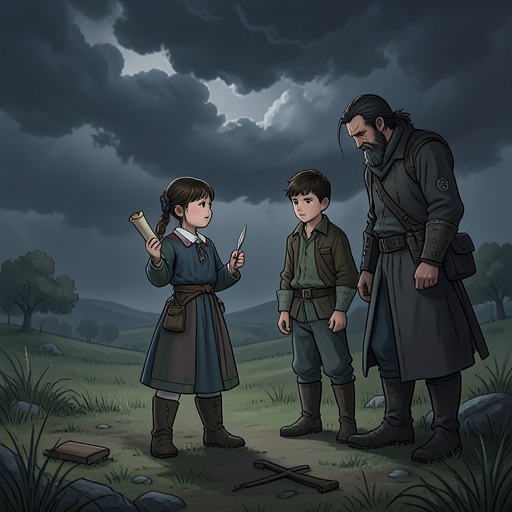
In Narnia, Aslan addresses Jill as a human child and gives her responsibility for a task with grave stakes. An aged king has no heir because his only son was stolen years earlier; the prince is still alive, although no one in Narnia knows where he is. Aslan commands Jill to seek him until she finds him and brings him to his father, dies in the attempt, or returns to her own world. The scale of this commission contrasts sharply with the powerlessness of the girl first seen behind the gym.
The Quest and Its Signs
Jill raises the possibility that she and Eustace have arrived in Narnia by mistake, since they called to someone whose name she did not know. Aslan answers that she would not have called to him unless he had first been calling to her. The exchange places her uncertainty beside the authority of the guide who has summoned her, and leads directly to the assignment.
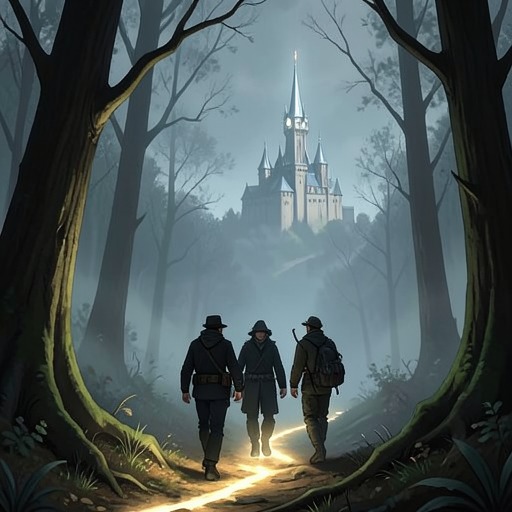
Aslan gives Jill four signs by which he will guide the search. Eustace must greet an old and dear friend as soon as he enters Narnia; the pair must travel north to the ruined city of the ancient giants; they must obey an inscription on a stone there; and they will recognize the lost prince as the first person they meet who asks them to do something in Aslan’s name. These instructions make the quest depend on attention and memory as much as on travel. Jill’s eventual part in the rescue is not a flawless performance of the directions: when the captive prince pleads in Aslan’s name, the travelers must decide whether to honor the sign even though they fear what releasing him may bring.
Courage Under Enchantment
At the crisis of the quest, the travelers stand looking at one another before Jill abruptly agrees to proceed. She and her companions recognize the danger in freeing the captive, and their farewells make the decision feel consequential rather than easy. Jill’s choice helps turn recognition of the sign into action: Puddleglum and Eustace draw their swords and cut the cords binding the man to the silver chair.
Later, when the Witch tries to recast Narnia as an imagined land and Jill as its queen, Jill resists her soothing, mocking account. She says that the travelers have been to the places the Witch dismisses, and insists that they come from another world. Jill can feel enchantment taking hold, but the fact that she can still detect it shows that it has not fully overcome her. Her awareness does not make her immune; it gives her a remaining point of resistance, and she uses it to hold to what she and the others have experienced.
After the Witch’s defeat, Rilian thanks his rescuers and explains that the serpent they have overcome is the same creature he pursued at a fountain in a Narnian forest years earlier: the slayer of his mother, who had kept him enslaved. Jill answers simply that she is all right when he turns his concern toward her. His recognition of the serpent clarifies the history behind his captivity, while Jill’s brief reply places her composure amid the aftermath of the struggle.
Return to Narnia and England
Jill’s escape from the underground comes by way of a small opening in a hillside. After spending so long in darkness, she first sees pale blue light and flying white shapes from what seems to be an upstairs window. Standing on Puddleglum’s shoulders lets her see more clearly: the light is moonlight, the white ground is snow, and the figures below are Fauns and Dryads dancing in Narnia. A snowball thrown by a Dwarf strikes her as she begins to speak, but she is too delighted by the sight of the upper world to mind.
Jill calls for help, and the Narnians, who had not noticed the opening, run toward her. A dozen or more hands reach up; they pull her from the hole and she slides down the bank. Once out, she calls attention to the others still below, including Rilian, and asks the gathering crowd to dig them out. Her first act in the restored world is thus to turn the rescue she has received into a call to rescue her companions.
Later, when Aslan appears, Jill is overwhelmed by memories of having made Eustace fall over the cliff, having mishandled most of the signs, and having quarrelled with her companions. She wants to apologize but cannot speak. Aslan draws the children toward him and tells them not to think further of it: they have done the work for which he sent them to Narnia. Jill then asks whether they may go home. The moment closes her quest not with a claim of perfect execution, but with the assurance that its purpose has been fulfilled despite her errors.
Back at Experiment House, Jill and Eustace are among the figures who confront the bullies after Aslan breaks open the school wall. Jill uses her riding crop against the girls while Eustace and Caspian use the flats of their swords against the boys. The Head’s account of the disturbance prompts an inquiry, which exposes problems at the school and leads to about ten pupils being expelled. From then on, Experiment House improves and becomes a good school. Jill secretly buries her fine clothes on the school grounds, while Jill smuggles hers home and wears them to a fancy-dress ball the following holiday; the distinction in their choices accompanies their return to ordinary life. Jill and Eustace remain friends thereafter.
Relationships and Narrative Role
Jill’s relationship with Eustace is established through shared danger and shared responsibility. They arrive in Narnia together, receive the same task, and must interpret its signs together. At the breaking point, Jill’s decision to go ahead gives practical force to the choice the group faces. Their friendship also persists after the adventure, linking the extraordinary quest to their changed lives at school.
Jill’s dealings with Aslan frame the journey from its beginning to its close. She first wonders whether her arrival is a mistake; he tells her that his call preceded hers and entrusts her with finding Rilian. At the end, he acknowledges that the children have completed the work, even while Jill remembers the errors and quarrels along the way. Her role is not that of a guide who never falters, but of a young person who can still recognize a demand for action amid confusion and fear.
The return to Experiment House gives Jill’s story a second consequence beyond the rescue in Narnia. The institution that first appears unable or unwilling to stop bullying is exposed to inquiry and improves; Jill’s friendship with Eustace continues within that altered setting. Her trajectory joins two kinds of change: a prince is restored to his place in Narnia, while the children return to a school that is no longer described as the same hostile place where Jill began crying behind the gym.